Reuse, Recycling, and Waste Reduction
Summary
Reuse and waste reduction keep building materials out of landfills through deconstruction, salvage, recycling, and waste planning. Demolition produces most construction and demolition debris, so decisions about retaining or dismantling an existing building have the largest effect.
Cols
Scope
- Deconstruction: careful dismantling of buildings to salvage components for reuse and recycling
- Demolition share: demolition is more than 90 percent of construction and demolition waste generation, construction less than 10 percent
- Salvage potential: about 70 percent of the materials in a typical demolition project could be salvaged, according to a Minnesota course manual
- Market share: revenue from deconstruction and reuse is about 0.2 percent of total US construction and demolition waste, per Build Reuse
Common issues
- Time: deconstruction takes extra time and effort, which can deter projects with tight schedules
- Contaminants: asbestos, lead, PCBs, and mercury must be handled to EPA and state requirements
- Policy: some cities have adopted or are considering ordinances requiring deconstruction; Portland's first year permitted 80 homes and diverted an estimated 2,500 tons of materials
Coordination
- Waste management plan: set diversion targets and tracking in the specifications
- Hazardous materials survey: complete before demolition or deconstruction
Sources
- Hennepin County, MN: construction and demolition recycling manual, chapter 6, https://www.hennepin.us/-/media/hennepinus/residents/recycling/recycling-ambassadors/cra-manual-ch-6.pdf
- RecyclingWorks Massachusetts: building deconstruction, https://recyclingworksma.com/building-deconstruction-a-sustainable-alternative-to-traditional-demolition
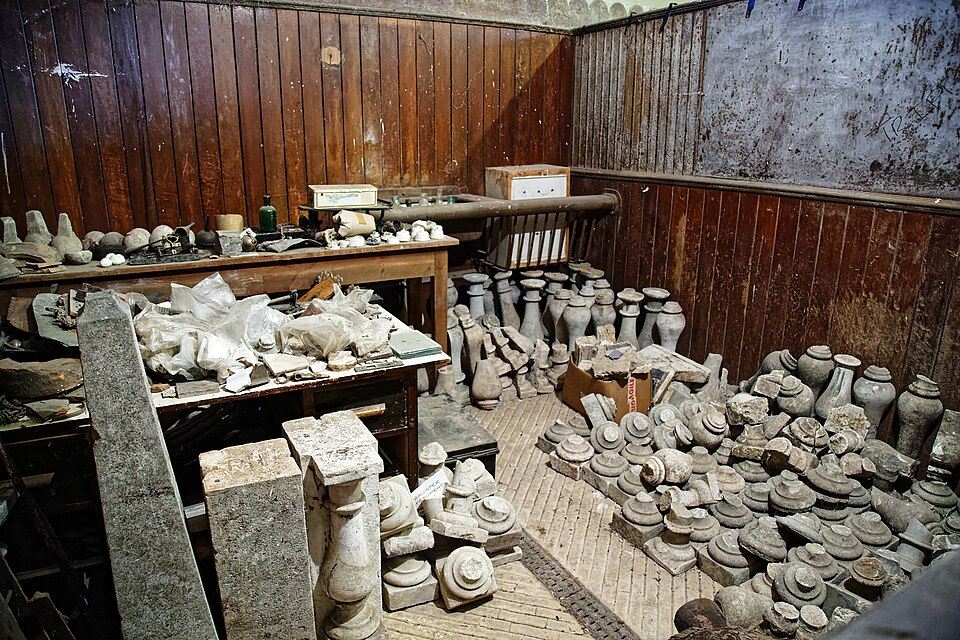
- Wikimedia Commons: Copped Hall architectural salvage, Epping, Essex, England 01.jpg, by Acabashi (CC BY-SA 4.0), https://commons.wikimedia.org/wiki/File:Copped_Hall_architectural_salvage,_Epping,_Essex,_England_01.jpg