Crushed Stone
Summary
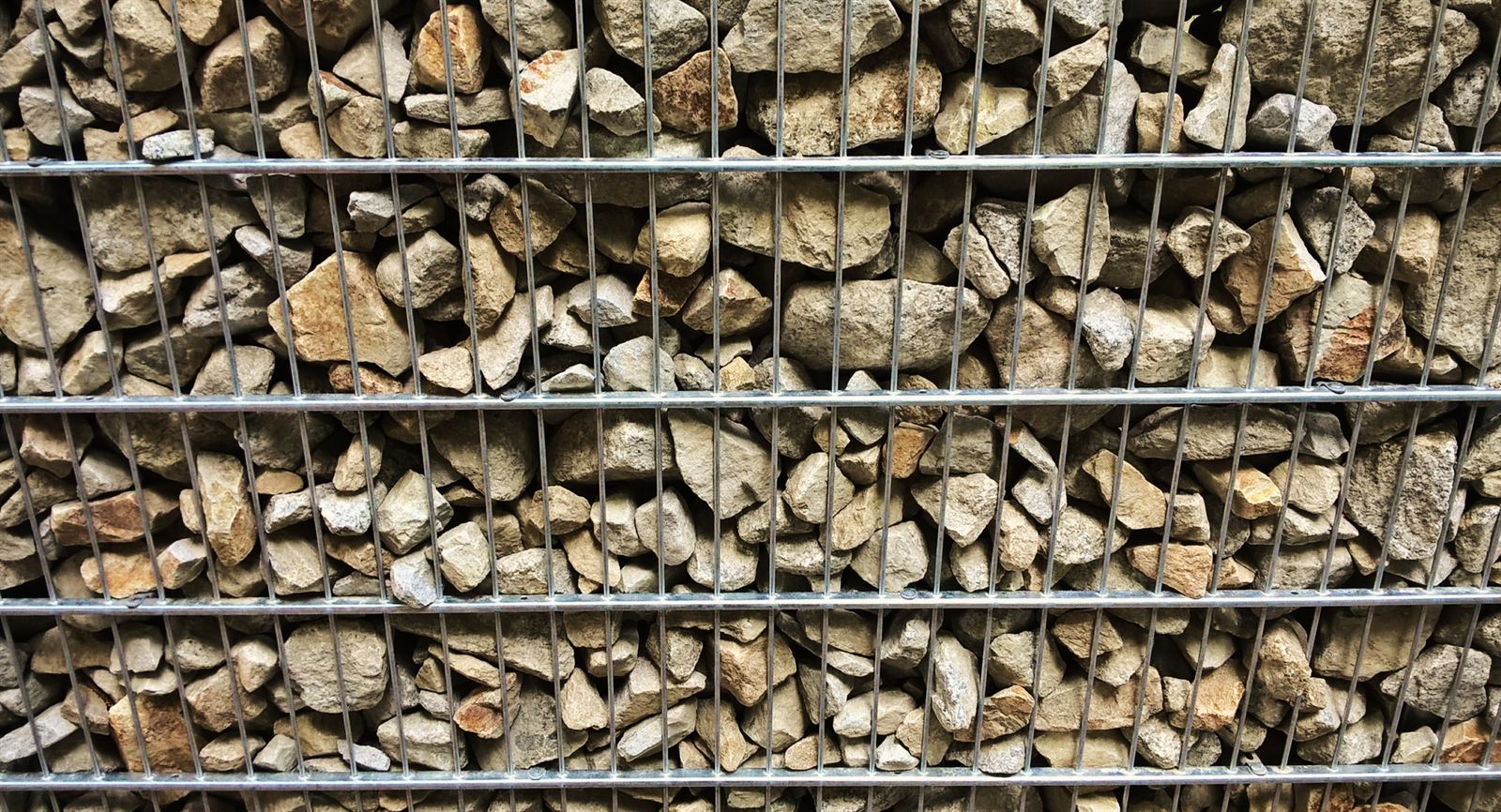
Crushed stone is quarried rock (basalt, dolomite, granite, limestone, sandstone) crushed and screened to graded sizes, the largest construction aggregate by tonnage in the United States. Aggregate base course, drainage stone, and concrete and asphalt aggregate are specified by gradation, so size designation and source matter more than rock name.
Cols
Terminology
- Aggregate base (ABC): crushed rock, usually passing a 20 mm screen, used under roads, foundations, and pipelines
- d/D size: smallest and largest sieve openings (European designation)
- Recycled aggregate: blast furnace and steel slag, recycled concrete, recycled glass
- Specialty lightweight aggregates: clay, pumice, perlite, vermiculite
History and demand
First uses in construction
- Sand and stone have been used in foundations for thousands of years; Roman roads and aqueducts drove major advances in aggregate production
Sourcing
- United States crushed stone output was about 1.5 billion tons in 2025, flat from 2024 (USGS)
Demand trend
- United States 2006: crushed stone about 1.72 billion tonnes ($13.8 billion) and sand and gravel about 1.32 billion tonnes ($8.54 billion)
- Demand by sector: roughly 30 to 35 percent non-residential building, 25 percent highways, 25 percent housing
- Crushed stone is replacing natural gravel in the eastern United States
- Aggregates are among the most mined materials in the world; hauling more than 40 km is typically uneconomical
Composition and production
Raw materials
- Common rock types: basalt, dolomite, granite, limestone, sandstone
- Recycled sources: air-cooled slag, recycled concrete, recycled glass (pipe bedding and fill); some geosynthetic aggregates are over 99.9 percent recycled polystyrene
Standards
Material specifications
- ASTM D692 and D1073: aggregate specifications cited by Wikipedia for United States use
- EN 13043 (road construction), EN 12620 (concrete), EN 13242 (base layers), EN 13450 (railway ballast): European standards
Uses in buildings
Building elements
- Slab on Grade: compacted base course under slabs
- Site Paving: aggregate base under roads and pavements
- Retaining Walls, Site Drainage: drainage stone behind walls and in trenches
- Pipe Bedding: base under pipelines
Pros and cons
Pros
- High hydraulic conductivity for drainage
- Recycled sources reduce landfill and virgin extraction (UK recycled 67 of 210 million tonnes in 2008)
- Replaces natural gravel
Cons
- Haul distance limits economic supply to about 40 km
Manufacturing and cost
Main manufacturers and suppliers
Trade association: National Stone, Sand and Gravel Association.
Sources
- Wikipedia: Construction aggregate, https://en.wikipedia.org/wiki/Construction_aggregate
- Wikipedia: Gravel, https://en.wikipedia.org/wiki/Gravel
- Wikimedia Commons: Stone crushed into building material.jpg, photo by BogTar201213 (CC BY-SA 4.0), https://commons.wikimedia.org/wiki/File:Stone_crushed_into_building_material.jpg
- USGS: Mineral Commodity Summaries 2026, crushed stone, https://pubs.usgs.gov/periodicals/mcs2026/mcs2026-stone-crushed.pdf