Clay Soil
Summary
Clay soil is mineral particles finer than 2 μm that become plastic when wet and harden when dried or fired. Expansive clays crack foundations and slabs, while low permeability makes clay a barrier in dam cores and liners.
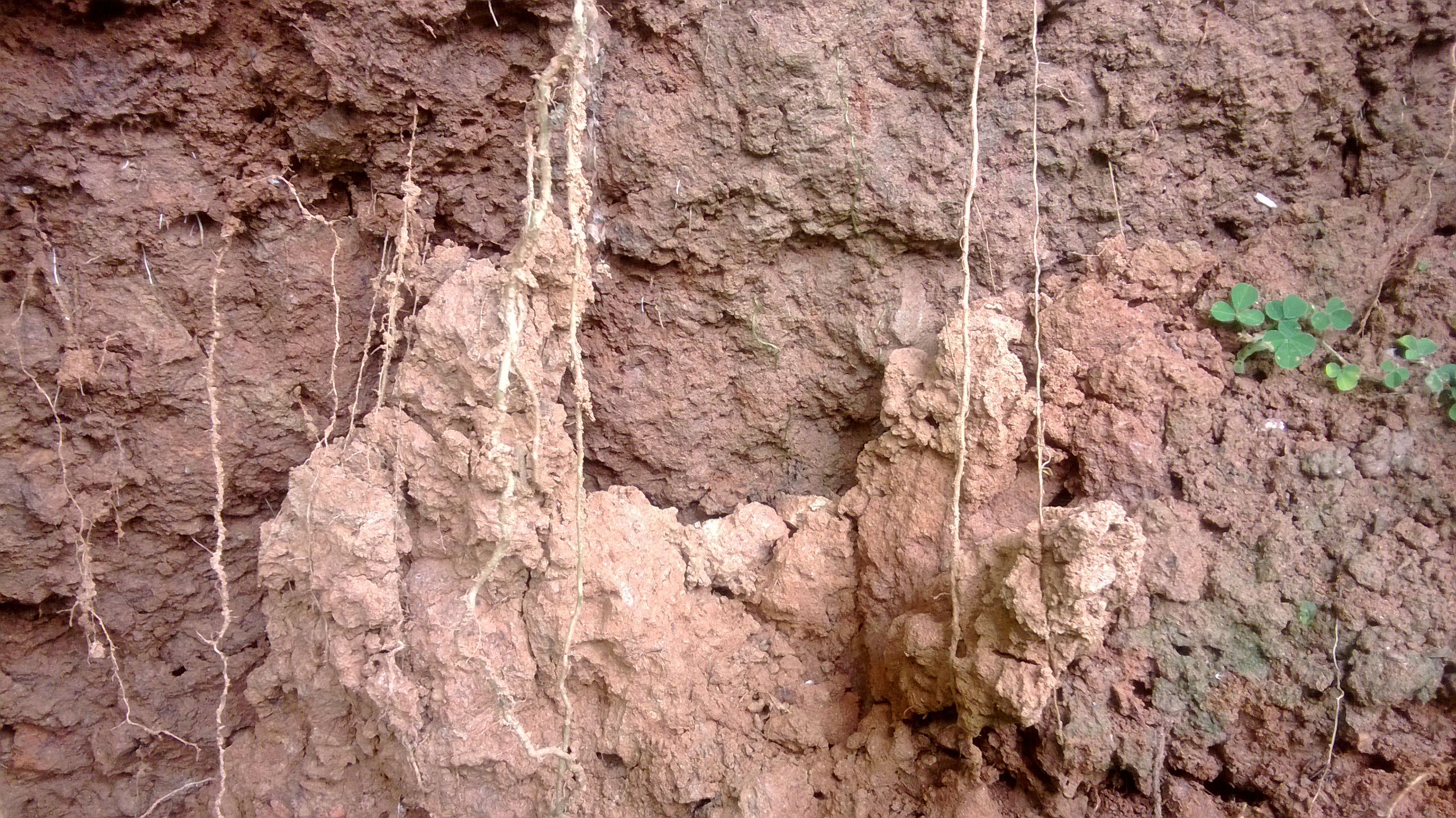
Terminology
- Plasticity: ability to deform without cracking when wet; measured by Atterberg limits
- Smectite / bentonite: swelling clay minerals
- Kaolinite: low-swell clay mineral
- Expansive soil: clay-rich soil that swells and shrinks with moisture
- Quick clay: sensitive marine clay prone to liquefaction and landslides
- CL / CH: USCS clay groups with liquid limit below 50 / 50 or more
- Loam: sand, silt, and less than 40 percent clay
Grades and types
- Particle size: finer than 2 μm (0.002 mm) under ISO 14688; sedimentologists use 4 to 5 μm, colloid chemists 1 μm
- Engineers: separate silt from clay by plasticity (Atterberg limits) rather than size
Properties
Thermal and moisture
- Kaolinite plastic limit: roughly 36 to 40 percent water; liquid limit roughly 58 to 72 percent
- Swelling: smectite clays absorb large amounts of water, expand substantially, and shrink back when dried
- Permeability: relatively impermeable
Mechanical
Standards
Test methods
- ASTM D2487: soil classification
- ASTM D4318: Atterberg limits and plasticity index
- ASTM D4829: expansion index
- ASTM D6913: particle-size distribution
Uses in buildings
Building elements
- Spread and Continuous Footings, Slab on Grade: expansive clay drives footing depth, over-excavation, and post-tensioned slabs
- Adobe Walls: clay is the binder in adobe block
Pros and cons
Pros
- Low permeability suits seals and liners
- Dry clay is often stable in excavations
- Raw material for adobe, cob, and brick
Cons
- Swelling clays crack foundations and damage road beds
- Retains water, so clay soils often need drainage
- Quick clay can liquefy
Sources
- Wikipedia: Clay, https://en.wikipedia.org/wiki/Clay
- Wikipedia: Unified Soil Classification System, https://en.wikipedia.org/wiki/Unified_Soil_Classification_System
- Wikimedia Commons: Clay Soil.jpg, photo by Krish Dulal (CC BY-SA 3.0), https://commons.wikimedia.org/wiki/File:Clay_Soil.jpg