Lime
Summary
Terminology
- Quicklime: calcium oxide (CaO)
- Hydrated (slaked) lime: calcium hydroxide, Ca(OH)2
- Lime putty: made by wet slaking with a slight excess of water
- Natural hydraulic lime (NHL): from limestone that naturally contains some clay
- Dolomitic lime: 35 to 46 percent magnesium carbonate (ASTM C59)
- Selenitic lime: about 5 percent added gypsum plaster
History and demand
First uses in construction
- Romans used two types of lime mortar to make Roman concrete
Sourcing
- 2025 world lime production was about 420 million tons (estimate), with the United States about 15 million tons; China produced about 310 million tons in the 2025 edition (USGS)
Composition and production
Raw materials
- Limestone with 80 percent or more calcium or magnesium carbonate; pure lime may contain up to 5 percent other ingredients
Manufacturing process
- Limestone is calcined above 900°C (1,650°F) in a kiln to make quicklime
- Dry slaking uses just enough water to keep the quicklime a powder; wet slaking makes putty
Grades and types
- Feebly hydraulic: 5 to 10 percent clay; slakes in minutes; sets in about three weeks
- Moderately hydraulic: 11 to 20 percent clay; slakes in 1 to 2 hours; sets in about one week
- Eminently hydraulic: 21 to 30 percent clay; slakes very slowly; sets in about one day
- Semi-hydraulic: minimum 6 percent soluble silica
- Magnesium lime: 5 to 35 percent magnesium carbonate (ASTM C59)
Properties
Durability
- Slaked lime hardens by reacting with carbon dioxide to form calcium carbonate
- Pure lime is not hydraulic and will not set under water
Standards
Material specifications
- ASTM C207: hydrated lime for masonry
- ASTM C59: quicklime and magnesium lime composition
Uses in buildings
Building elements
- Interior Plaster: lime plaster
- Exterior Plaster and Stucco: lime stucco
- Brick Veneer Walls: lime mortar
Pros and cons
Pros
- Hardens by carbonation without cement
- Hydraulic grades set in days
- Long historical record in plaster and mortar
Cons
- Pure lime does not set under water
- Feebly hydraulic limes take about three weeks to set
Manufacturing and cost
Main manufacturers and suppliers
Trade association: National Lime Association.
Sources
- Wikipedia: Lime (material), https://en.wikipedia.org/wiki/Lime_(material)
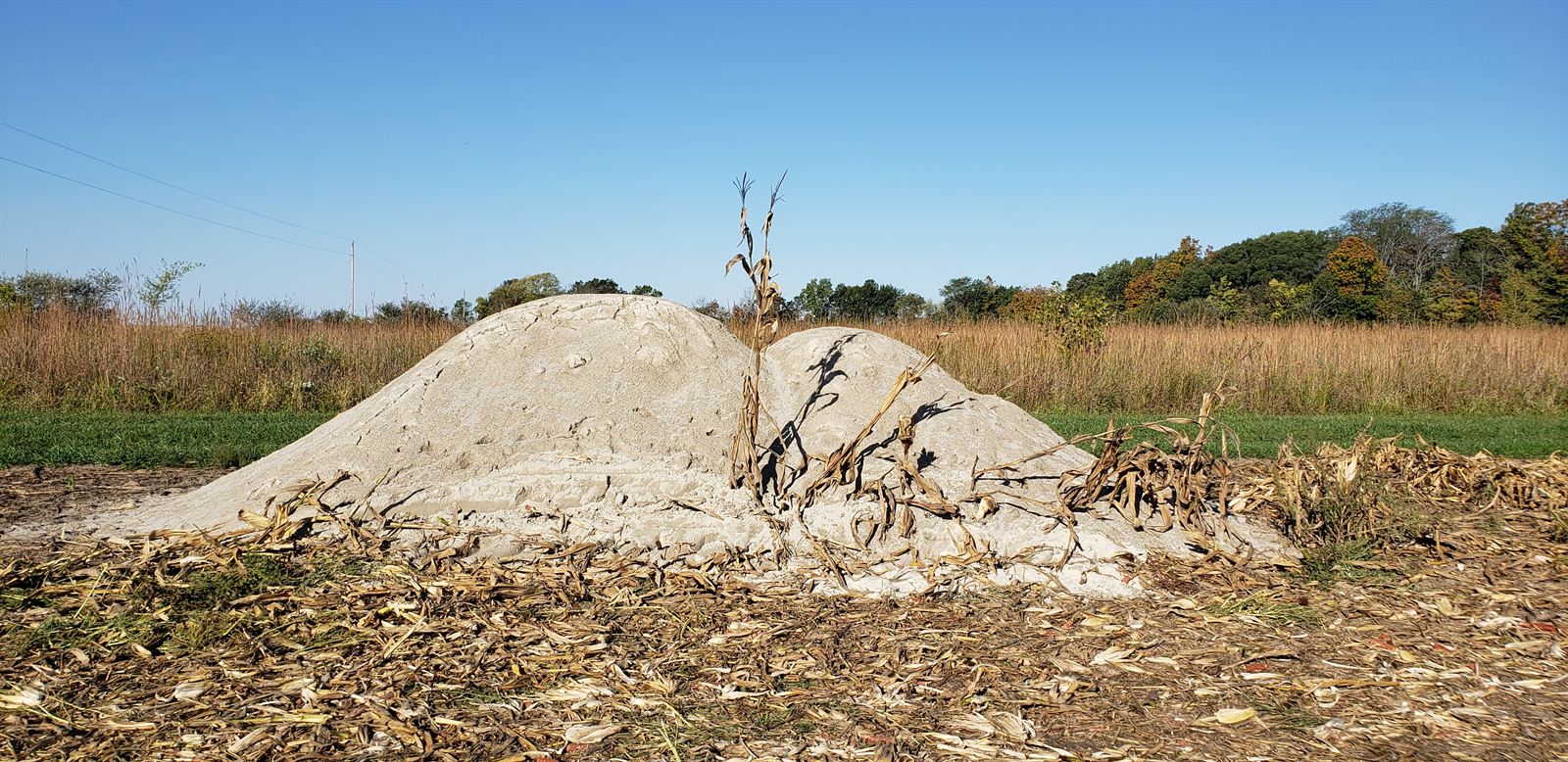
- Wikimedia Commons: Agricultural lime in field. Lime pile.jpg, photo by Slknight (CC BY-SA 4.0), https://commons.wikimedia.org/wiki/File:Agricultural_lime_in_field._Lime_pile.jpg
- USGS: Mineral Commodity Summaries 2026, lime, https://pubs.usgs.gov/periodicals/mcs2026/mcs2026-lime.pdf