Backflow Preventers
Summary
Backflow preventers protect the potable water supply from cross connections, ranging from simple air gaps and vacuum breakers at fixtures to testable double check and reduced pressure principle assemblies at services, irrigation, boilers, and fire sprinkler connections. Large assemblies need floor space, drainage for relief discharge, freeze protection, and test access, so their rooms or enclosures must be planned with the water service.
Cols
Terminology
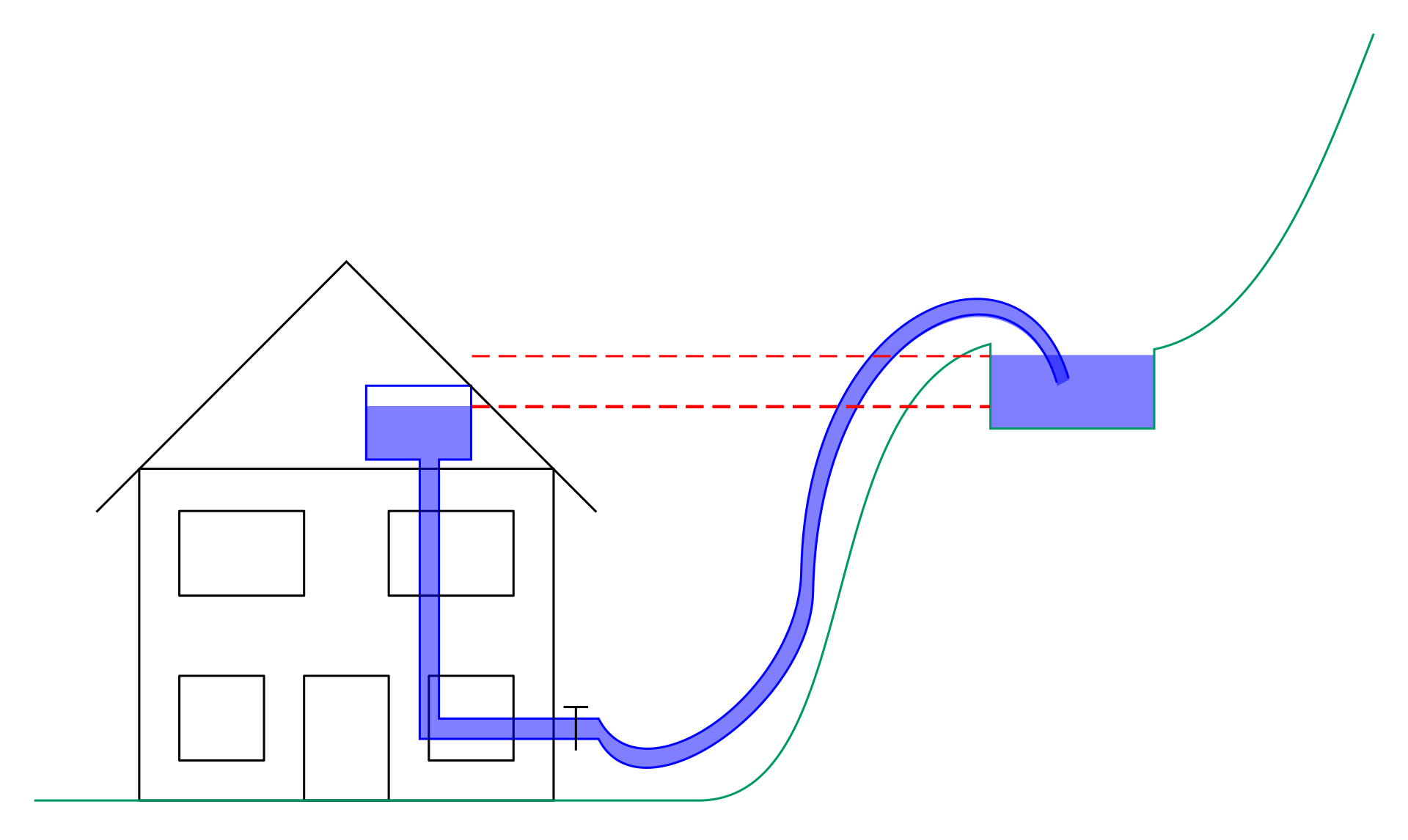
- Backflow: reverse flow from backpressure or backsiphonage
- Cross connection: link between potable water and a possible contaminant source
- Air gap: vertical open space between an outlet and a fixture's flood rim
- Atmospheric vacuum breaker (AVB) / pressure vacuum breaker (PVB): backsiphonage protection
- Double check assembly (DCVA): two check valves; low hazard
- Reduced pressure principle assembly (RP or RPZ): checks with a relief valve; high hazard
- Dual check: small nontestable device, such as at meters
- Degree of hazard: low (pollutant) or high (contaminant)
- Containment / isolation: protection at the service or at individual equipment
Standards
Ratings
- RPZ assemblies acceptable for high or low hazard; double check assemblies for low hazard only
- RPZ relief openings discharge through an air gap to an indirect waste receptor or outdoors, sized for the maximum relief flow
- Pressure vacuum breakers set at least 12 in. above downstream piping and outlets
- Boilers need a backflow preventer with intermediate atmospheric vent, or an air gap or RPZ where chemicals are added
- Lawn irrigation uses AVB, PVB, or RPZ protection, with RPZ where chemicals are injected
- Fire sprinkler systems use double check or RPZ assemblies, with RPZ where antifreeze or additives are used
- Testable assemblies tested at installation, after repair or relocation, and at least annually
Test standards
- ASSE 1013 / AWWA C511: reduced pressure principle assemblies
- ASSE 1015 / AWWA C510: double check assemblies
- ASSE 1020: pressure vacuum breakers
- ASSE 1012: backflow preventers with intermediate atmospheric vent
- ASSE 1024: dual check valve backflow preventers
- ASME A112.1.2: air gaps
Components
- Assembly: two independent check valves, shutoff valves, and test cocks; plus relief valve on RPZ
- Strainer: upstream protection
- Enclosure: insulated and heated outdoor enclosure where exposed
- Drain: floor drain or air gap funnel for RPZ relief discharge
Detailing
- Locate RPZs where relief discharge will not cause damage; provide adequately sized drains
- Install assemblies with test access and clearance, not in pits subject to flooding
- Protect outdoor assemblies from freezing with heated enclosures
- Coordinate service-entry assemblies with the water utility and fire department connection
Uses
Specific uses
- Building water service containment
- Fire sprinkler and standpipe connections
- Boiler and chilled water makeup
- Lawn irrigation
- Beverage dispensers and coffee machines
- Laboratories and healthcare equipment
Pros and cons
Pros
- Protects public water from contamination
- Testable assemblies verify performance
- Air gaps are simple and reliable
Cons
- RPZ relief discharge needs drainage and can flood rooms
- Annual testing adds operating cost
- Pressure loss through assemblies
Manufacturing and cost
Construction
- Factory-assembled bronze or stainless steel assemblies; installed in mechanical rooms or enclosures and tested by certified testers
Main manufacturers and suppliers
Trade associations: ASSE International and American Backflow Prevention Association.
Sources
- UpCodes: 2024 IPC Chapter 6 water supply and distribution (Section 608 protection of potable water; GSA adoption without amendments), https://up.codes/viewer/general-services-administration/ipc-2024/chapter/6/water-supply-and-distribution
- UpCodes: 2024 IPC Chapter 3 general regulations (backflow assembly testing), https://up.codes/viewer/general-services-administration/ipc-2024/chapter/3/general-regulations
- Duke University: 22 11 19 domestic water specialties, https://facilities.duke.edu/sites/default/files/22 11 19 Domestic Water Specialties.pdf
- Wikimedia Commons: Back siphon example hosepipe up hill.svg, by Stannered (Public domain), https://commons.wikimedia.org/wiki/File:Back_siphon_example_hosepipe_up_hill.svg