Fiberglass
Summary
Cols
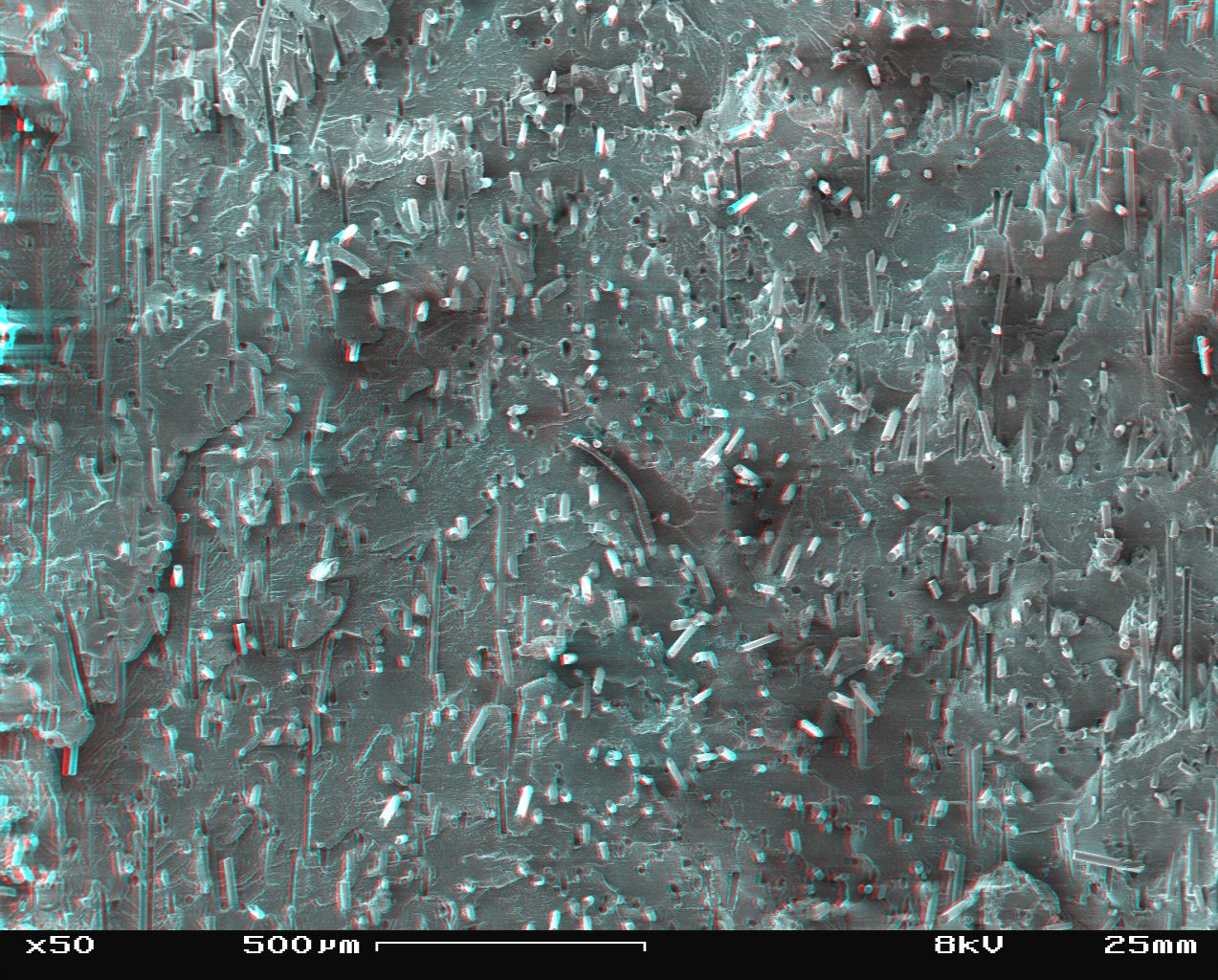
Terminology
- FRP / GRP: fiber-reinforced / glass-reinforced plastic
- E-glass / S-glass: alumino-borosilicate glass with less than 1 percent alkali oxides / higher-strength glass
- Chopped strand mat / woven cloth / roving: forms of glass reinforcement
- Matrix: thermoset resin (polyester, vinyl ester, epoxy)
- Fiberglas: Owens Corning trade name from 1936
History and demand
Invention
- 1880: Hermann Hammesfahr received the earliest glass fiber patent in the United States
- 1932: Games Slayter of Owens-Illinois accidentally made fibers with compressed air on molten glass; 1936 Owens Corning's patented "Fiberglas"
- 1937: Ray Greene built the first composite boat; fiberglass composite boats appeared in the early 1940s; aircraft radomes in WWII
Sourcing
- Global glass fiber capacity was about 12 million tons in 2025, with China about 70 percent; Japanese producers are about 6 percent (industry reports)
- Jushi (China) has about 2 million tons a year of capacity and Owens Corning about 1.4 million tons (about 2021 figures)
Demand trend
- E-glass makes up most of the world's fiberglass
Composition and production
Raw materials
- E-glass reinforcement (alumino-borosilicate, less than 1 percent alkali oxides) in epoxy, polyester, or vinyl ester resin; thermoplastic matrices also occur
Product forms
- Chopped strand mat, woven cloth, and rovings molded into panels, profiles, tanks, and tubs
Properties
Physical
- Density: 1.5 to 2.5 g/cm³ (about 94 to 156 lb/ft³)
Mechanical
- Tensile strength: 2,000 to 3,500 MPa for the fiber (290 to 508 ksi); E-glass epoxy 1,770 MPa (257 ksi); S-glass epoxy 2,358 MPa (342 ksi)
- Described as stronger than many metals by weight
Thermal and moisture
- Thermal conductivity: 0.035 to 0.045 W/(m·K), about 0.24 to 0.31 Btu·in./(h·ft²·°F)
- Resin shrinkage on cure: about 5 to 6 percent for polyester, about 2 percent for epoxy
Fire behavior
- Resin can lose function above about 180°C (356°F); GRP may retain significant strength after exposure to 200°C (392°F)
Standards
Material specifications
- AAMA 305: fiber-reinforced thermoset profiles
Uses in buildings
Building elements
- Fiberglass Entry Doors, Fiberglass Windows: molded door skins and pultruded window frames
- Horizontal Sliding Windows, Wood and Clad Wood Windows: stable fiberglass frames and exterior cladding
- Showers and Tubs, Grease Interceptors: molded tubs and receptors, and tanks
- Asphalt Shingle Roofing: glass-fiber mat base for shingles
Pros and cons
Pros
- Non-magnetic, non-conductive, and transparent to electromagnetic radiation
- Strong for its weight
- Moldable into tubs, tanks, and profiles
Cons
- Resin shrinkage of 2 to 6 percent can distort parts and cause internal stress
- Resin loses function above about 356°F
- Fibers and styrene vapors irritate eyes, skin, and airways
Sustainability
Health
- Fiberglass irritates the eyes, skin, and respiratory system; styrene vapors during curing irritate mucous membranes
- OSHA limits: 15 mg/m³ total and 5 mg/m³ respirable (8 hours); NIOSH recommends 3 fibers/cm³ and 5 mg/m³ total
- Insulation-grade glass wools are IARC Group 3 (not classifiable as to carcinogenicity)
Manufacturing and cost
Main manufacturers and suppliers
Trade association: American Composites Manufacturers Association.
Sources
- Wikipedia: Fiberglass, https://en.wikipedia.org/wiki/Fiberglass
- Wikimedia Commons: Glass reinforced plastic SEM Stereo 50x.JPG, photo by SecretDisc (CC BY-SA 3.0), https://commons.wikimedia.org/wiki/File:Glass_reinforced_plastic_SEM_Stereo_50x.JPG
- Faxiang Gongchang: China glass fiber 2026, https://faxiangongchang.com/en/reports/china-glass-fiber-2026