Standing Seam Metal Roofing
Summary
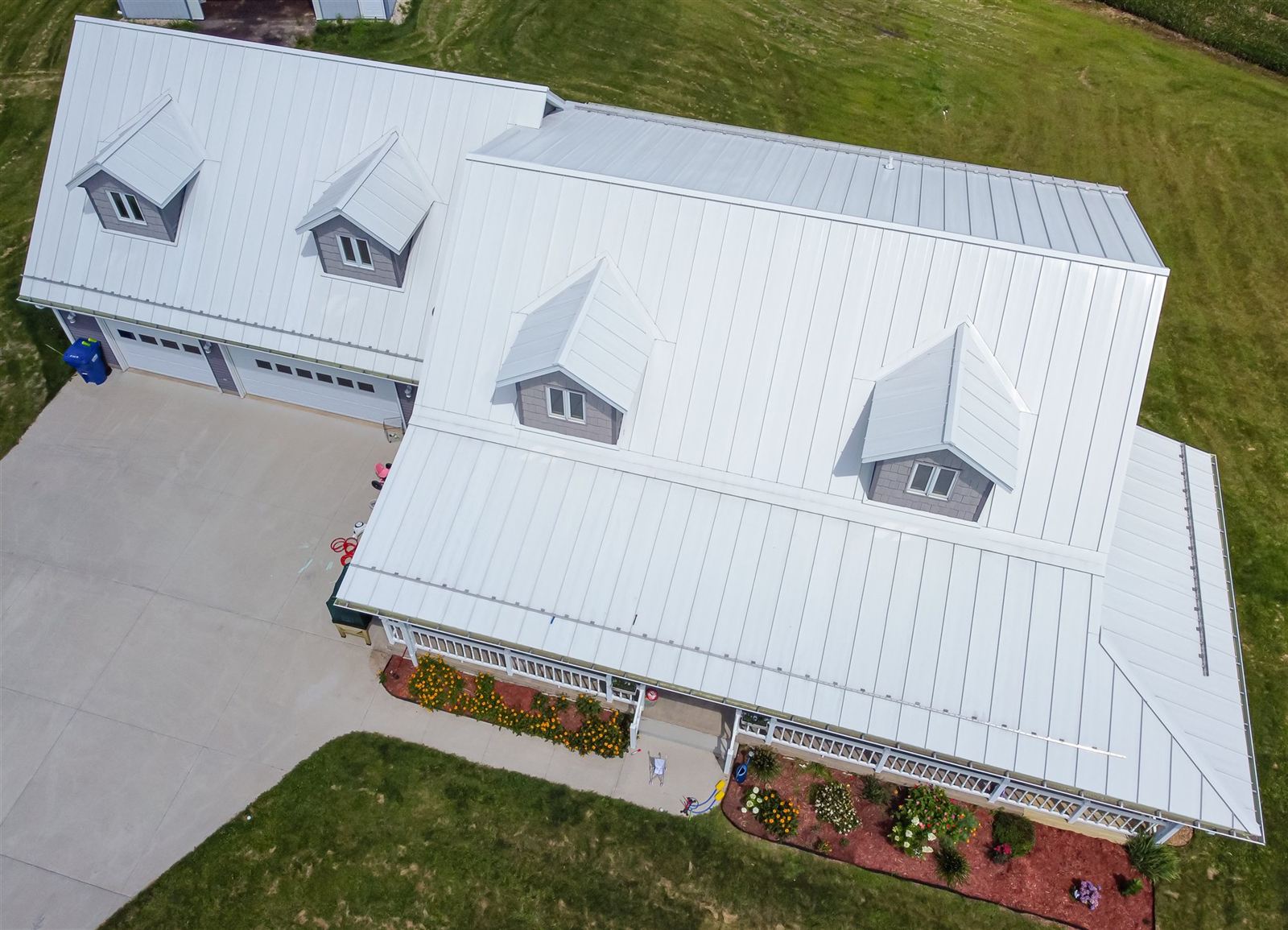
Standing seam metal roofing is long steel, aluminum, copper, or zinc panels with raised interlocking seams, attached by concealed clips that let panels expand and contract, over underlayment and solid deck or structural purlins. It is a long-life, low-maintenance roof that works from steep slopes down to near-flat, but seam type, panel length, thermal movement, and wind uplift testing decide where it can be used.
Cols
Terminology
- Architectural panel: relies on solid deck support; typically steeper slopes and water-shedding seams
- Structural panel: spans between purlins; tested for structural and wind performance; used on low slopes
- Snap-lock seam: panels snap together; fast, for moderate wind and slope
- Mechanically seamed (single- or double-lock): seams folded by a seaming machine; most watertight and wind resistant
- Clip (fixed / floating): concealed fastener; floating clips allow thermal movement
- Fixed point: location where panels are pinned so movement goes in a controlled direction
- Seam height: vertical rib height; taller seams for lower slopes and longer panels
- Panel width: coverage between seams; narrower panels reduce oil canning
- Oil canning: visible waviness in flat panel areas
- Striations / pencil ribs: formed lines that reduce oil canning
- Through-fastened panel: exposed-fastener panel, not standing seam; lower cost, more leak points
- Snow guards: devices that hold snow on the roof to prevent sliding
Standards
Ratings
- Wind uplift by test; structural standing seam often tested to ASTM E1592 or FM 4474
- Low-slope structural systems need mechanically seamed panels and seam sealant
- Fire classification Class A over most decks
Test standards
- ASTM E1592: structural performance of sheet metal roof panels
- FM 4474, UL 580: wind uplift
- ASTM A653 (G90 galvanized steel), ASTM A924 (metallic-coated steel), ASTM B209 (aluminum), ASTM A240 (stainless): substrates
- PVDF (fluoropolymer) coatings for long-life color finishes
Materials
- Galvalume steel: most common; unpainted or PVDF-painted
- Galvanized steel: painted
- Aluminum: coastal and corrosive environments
- Copper and zinc: long-life architectural roofs; patinate naturally
- Underlayment: high-temperature self-adhered or synthetic underlayment under panels
- Clips: stainless or galvanized steel; thermal spacers to limit bridging
Detailing
- Plan panel lengths and fixed points for thermal movement; allow slip at ridges, hips, and eaves
- Use high-temperature underlayment beneath metal
- Flash penetrations with metal curbs or boots that allow panel movement
- Add snow guards above entrances, walkways, and lower roofs
- Avoid dissimilar metals in contact (copper runoff on galvanized or aluminum)
- Coordinate solar clamps that attach to seams without penetrations
Uses
Specific uses
- Commercial and institutional sloped roofs
- Metal buildings and warehouses (structural standing seam)
- Residential roofs in snow, fire, and wind regions
- Retrofit over existing roofs with framing systems
- Roofs carrying seam-clamped solar arrays
Pros and cons
Pros
- Long service life with minimal maintenance
- Concealed fasteners limit leak points
- Sheds snow; good wind performance when tested
- Recyclable; supports solar without penetrations
Cons
- Higher cost than asphalt shingles
- Thermal movement and oil canning need careful detailing
- Noise from rain and hail without solid deck and insulation
- Dents from hail or traffic on thinner panels
Manufacturing and cost
Construction
- Coil roll-formed into panels in the shop or on site with portable machines for long runs
- Clips fastened to deck or purlins; panels installed and seamed
Main manufacturers and suppliers
Trade association: Metal Construction Association.
Typical costs
- Steel standing seam roof, installed: $10 to $18 per sq ft
- Premium metals (copper, zinc): $20 to $34 per sq ft installed
Sources
- McElroy Metal: 07 41 13 standing seam roof specification, https://blog.mcelroymetal.com/hubfs/assets/238t-07-41-13-pdf.pdf
- Roof Observations: standing seam metal roof cost guide, 2026, https://roofobservations.com/standing-seam-metal-roof-cost-guide/
- Resident: standing seam metal roof cost in 2026, https://resident.com/home-and-living/2026/04/28/standing-seam-metal-roof-cost-in-2026-what-it-really-costs-and-what-to-expect
- UpCodes: 2024 IBC Chapter 15 (metal panel testing and materials), Chapter 15 Roof Assemblies and Rooftop Structures: Department of Defense Building Code 2024 | UpCodes
- Metal Construction Association: resources, https://www.metalconstruction.org/
- Wikimedia Commons: Standing seam metal roof - white.jpg, by Wikideas1 (CC0), https://commons.wikimedia.org/wiki/File:Standing_seam_metal_roof_-_white.jpg