Stainless Steel
Summary
Stainless steel is steel alloyed with at least 10.5 percent chromium, which forms a passive surface film that resists corrosion; austenitic Types 304 and 316 are the common building grades. Grade choice (304 or 316), finish, and exposure drive corrosion performance in fixtures, piping, hardware, and exterior trim.
Terminology
- 304 / 316: austenitic grades; 304 is about 18 percent chromium ("18/8"); 316 adds molybdenum
- L grade (304L, 316L): low-carbon version of the grade
- Passive film: chromium oxide surface layer that resists corrosion
- Austenitic / ferritic / martensitic / duplex / PH: the five stainless families
- PREN: pitting resistance equivalent number, weighting chromium, molybdenum, and nitrogen
- ISSF: International Stainless Steel Forum
History and demand
Invention
- October 17, 1912: Krupp engineers Benno Strauss and Eduard Maurer patented the austenitic type (Nirosta, later 18/8 or AISI 304)
- 1913: Harry Brearley in Sheffield found a martensitic alloy while seeking a corrosion-resistant gun barrel steel; announced in January 1915 as "rustless steel," later named stainless steel for cutlery
- 1950s and 1960s: AOD refining, continuous casting, and the Sendzimir mill allowed large tonnages at affordable cost
First uses in construction
- 1929: Brearley's alloy, marketed as Staybrite, clad the Savoy Hotel entrance canopy in London; more than 25,000 tons were produced and sold in the United States that year
Sourcing
- 2025 melt shop production was 64.2 million tonnes; China made more than 40.8 million tonnes, 64 percent; Europe more than 5.6 million tonnes and the United States about 2.1 million (World Stainless Association via Recycling Today)
Demand trend
- Rising: world melt shop production was 64.2 million tonnes in 2025, up 2.1 percent from 2024, and 15.8 million tonnes in Q1 2026, up 2.5 percent (World Stainless Association); flat and long output was 38.5 million tonnes in 2013
- Austenitic grades are about two-thirds of production
Composition and production
Raw materials
- Iron with at least 10.5 percent chromium
- Type 304 (UNS S30400): chromium 17.5 to 19.5 percent, nickel 8.0 to 10.5 percent, carbon 0.07 percent maximum
Grades and types
- Austenitic (304, 316): largest family, about two-thirds of production; nonmagnetic face-centered cubic structure
- Ferritic (430): magnetic, 10.5 to 27 percent chromium, little or no nickel; ISSF states Type 430 can often replace 304 in non- or lightly corrosive interiors
- Martensitic: magnetic, hardenable by heat treatment
- Duplex: mixed austenite-ferrite structure with roughly twice the yield strength of austenitic grades
- Precipitation hardening: defined by heat treatment
- 316 over 304: recommended for marine or heavily polluted sites; molybdenum improves the passive film
Properties
Physical
- Density: 7.5 to 8.0 g/cm³ by alloy (about 468 to 499 lb/ft³); Type 304 0.285 lb/in³
Mechanical
- Type 304 yield strength: 30 ksi minimum (ASTM A240)
- Type 304 tensile strength: 75 ksi minimum
- Type 304 elongation: 40 percent minimum
- Type 304 hardness: 92 HRB maximum
- Type 304L (ASTM A240): yield 25 ksi, tensile 70 ksi minimum
Fire behavior
- Melting range: 2,417 to 2,786°F (1,325 to 1,530°C) by alloy
Standards
Material specifications
- ASTM A240: chromium and chromium-nickel stainless plate, sheet, and strip
- ASTM A480: general requirements for flat-rolled stainless products, including finishes
- AISC 370: structural stainless steel (austenitic and duplex)
- ASCE 8: cold-formed stainless steel structural members
Uses in buildings
Building elements
- Domestic Water Piping: press-fit tube and fittings
- Drinking Fountains and Bottle Fillers, Lavatories and Sinks: basins and bubblers
- Floor Drains and Cleanouts: bodies and strainers
- Water Heaters, Hydronic Boilers: storage tanks, condensing heat exchangers, and Category IV vent systems
- Automatic and Revolving Doors, Frameless Glass Doors: cladding, fittings, and rails
- Standing Seam Metal Roofing, Metal Wall Panels: roof panels and wall cladding
Pros and cons
Pros
- Passive film resists corrosion without coatings
- Wide grade range for corrosion, strength, and cost
- Duplex grades offer roughly twice the yield strength of austenitic grades
- Recyclable
Cons
- Nickel content ties price to the nickel market
- Type 304 is not recommended for marine or heavily polluted sites; 316 is
- Ferritic grades are limited to non- or lightly corrosive interiors
Finishes and treatments
- Mill, brushed, and polished finishes: flat-rolled finishes defined in ASTM A480
- Passivation: restores the chromium oxide film after fabrication
Sustainability
Embodied carbon
- Outokumpu 2023 stainless output: 1.52 kg CO2e per kg, against a cited global average of 7 kg CO2e per kg (producer announcement; not an industry-average EPD)
Recycled content and end of life
- Fully recyclable
Manufacturing and cost
Main manufacturers and suppliers
Trade association: Specialty Steel Industry of North America.
Sources
- Wikipedia: Stainless steel, https://en.wikipedia.org/wiki/Stainless_steel
- World Stainless Association: melt shop production 2025, https://worldstainless.org/media/press-releases/stainless-steel-melt-shop-production-increases-by-2-1-in-2025/
- ATI: ATI 304 austenitic stainless steel, https://www.atimaterials.com/Products/ati-304
- ATI: ATI 304L austenitic stainless steel, https://atimaterials.com/Products/ati-304l
- ISSF: Building interiors, the ferritic solution, https://extranet.worldstainless.org/Files/issf/non-image-files/PDF/ISSF_Building_interiors_The_Ferritic_Solution.pdf
- Ancon: The use of stainless steel in construction, https://www.ancon.co.uk/downloads/127/The_Use_of_Stainless_Steel_in_Construction.pdf.pdf
- UpCodes: 2024 IBC Chapter 22 steel, Chapter 22 Steel: Department of Defense Building Code 2024 | UpCodes
- UpCodes: 2024 IBC Chapter 15 roof assemblies (Table 1507.4.3), Chapter 15 Roof Assemblies and Rooftop Structures: Department of Defense Building Code 2024 | UpCodes
- Tube & Wire trade fair news: Outokumpu environmental product declarations, https://www.tube-tradefair.com/en/Media_News/News/Industry_News/Outokumpu_presents_Environmental_Product_Declarations_to_promote_a_sustainable_stainless_steel_supply_chain
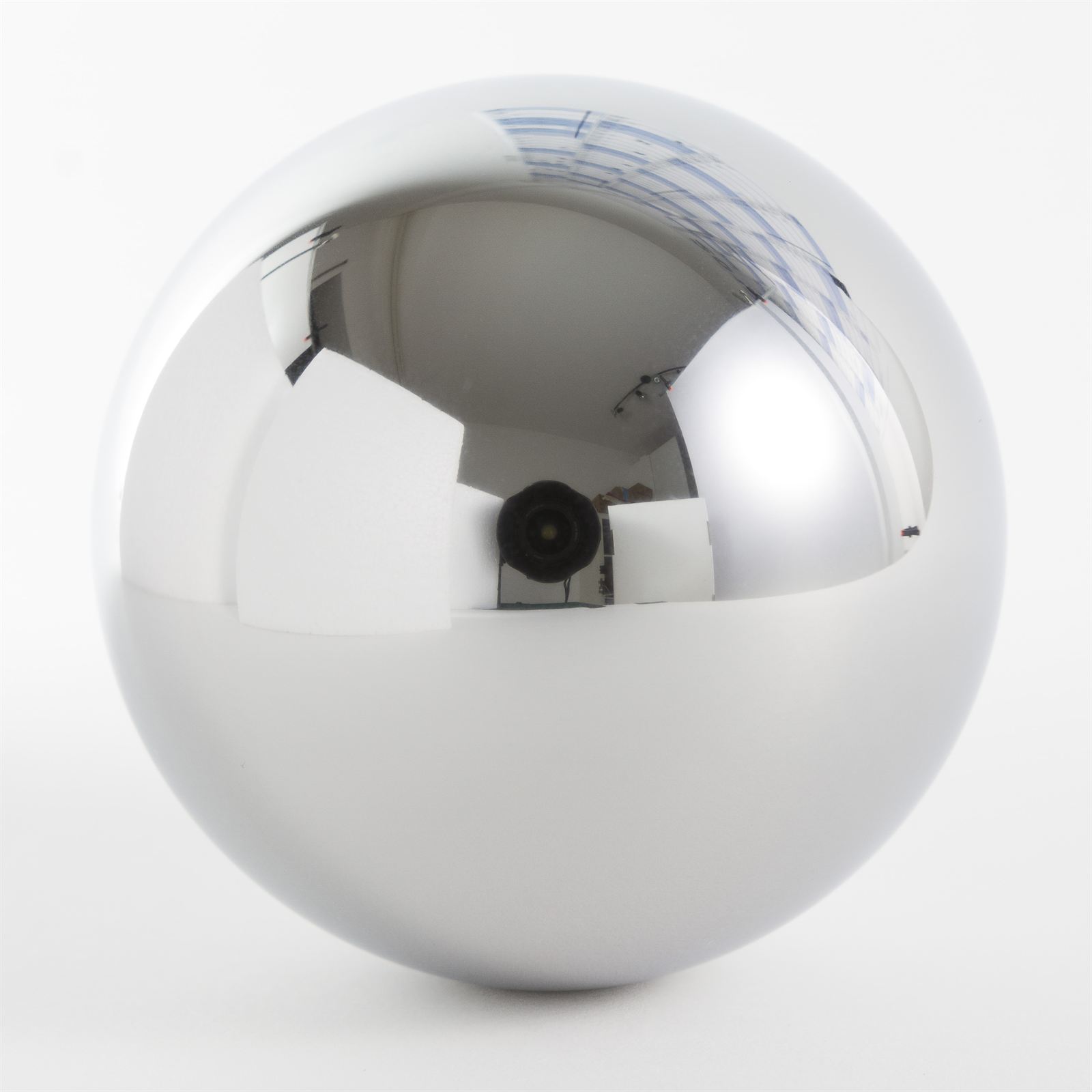
- Wikimedia Commons: Stainless steel 1.4034 X46Cr13 bearing ball 60mm G100.jpg, photo by Lucasbosch (CC BY-SA 3.0), https://commons.wikimedia.org/wiki/File:Stainless_steel_1.4034_X46Cr13_bearing_ball_60mm_G100.jpg
- Recycling Today: stainless steel production, China, Europe, USA, 2025, https://www.recyclingtoday.com/news/stainless-steel-production-china-europe-usa-2025