Energy Modeling
Summary
Energy modeling simulates a building's energy use from its geometry, envelope, systems, schedules, and weather. A model is only as good as its inputs and its calibration against measured data, so the intended use should set the model's detail and tolerance.
Cols
Terminology
- CV(RMSE): coefficient of variation of the root mean square error between model and measured data
- NMBE: normalized mean bias error
- Calibration: adjusting inputs until the model matches measured use within tolerance
Standards
- ASHRAE Guideline 14 sets calibration criteria using CV(RMSE) and NMBE; tolerances are looser for hourly than for monthly data, so check the Guideline for the data frequency used
- Studies using Guideline 14 have targeted monthly NMBE within +/-5 percent and CV(RMSE) under 10 percent, and accepted hourly CV(RMSE) of 15.7 percent with NMBE of 3.8 percent as calibrated
- The metrics are debated; some research proposes alternatives
Uses
- Measurement and verification of retrofit projects
- Predicting savings from energy conservation measures
- Commissioning building systems
Sources
- ASHRAE Guideline 14 (2014) calibration summary, https://web.eecs.utk.edu/~jnew1/publications/2016_ASHRAE_G14.pdf
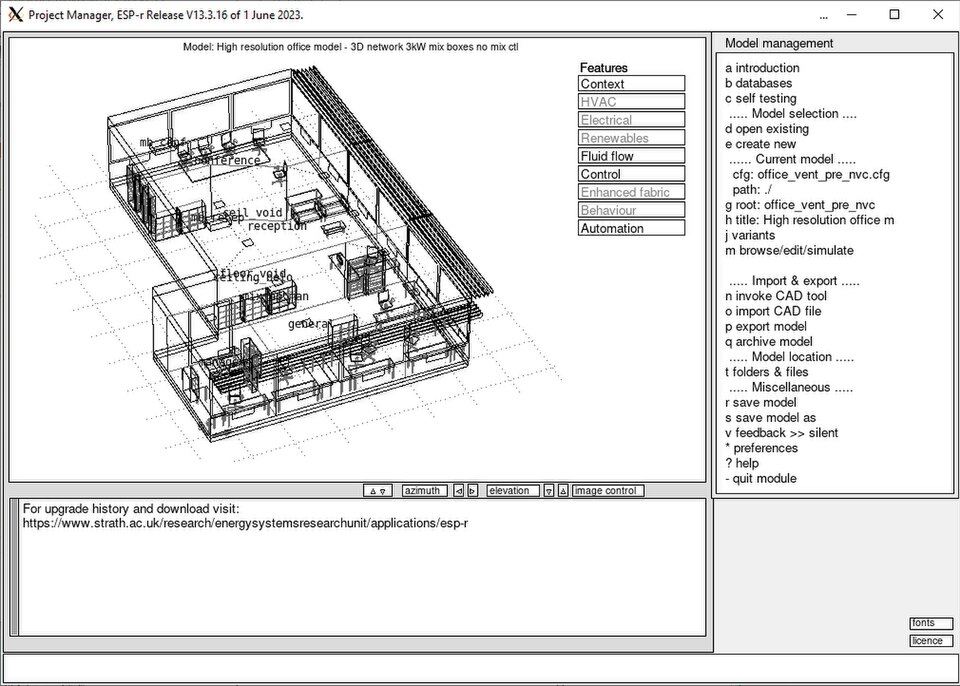
- Wikimedia Commons: Screen shot of ESP-r with the office building section exemplar model.jpg, by ESRU (Public domain), https://commons.wikimedia.org/wiki/File:Screen_shot_of_ESP-r_with_the_office_building_section_exemplar_model.jpg