Wool
Summary
Wool is the keratin fiber shorn from sheep, graded by fiber diameter and processed into yarn, felt, and batts. It is a renewable, naturally flame-resistant fiber for carpet and fabric, but it weakens when wet and absorbs water readily.
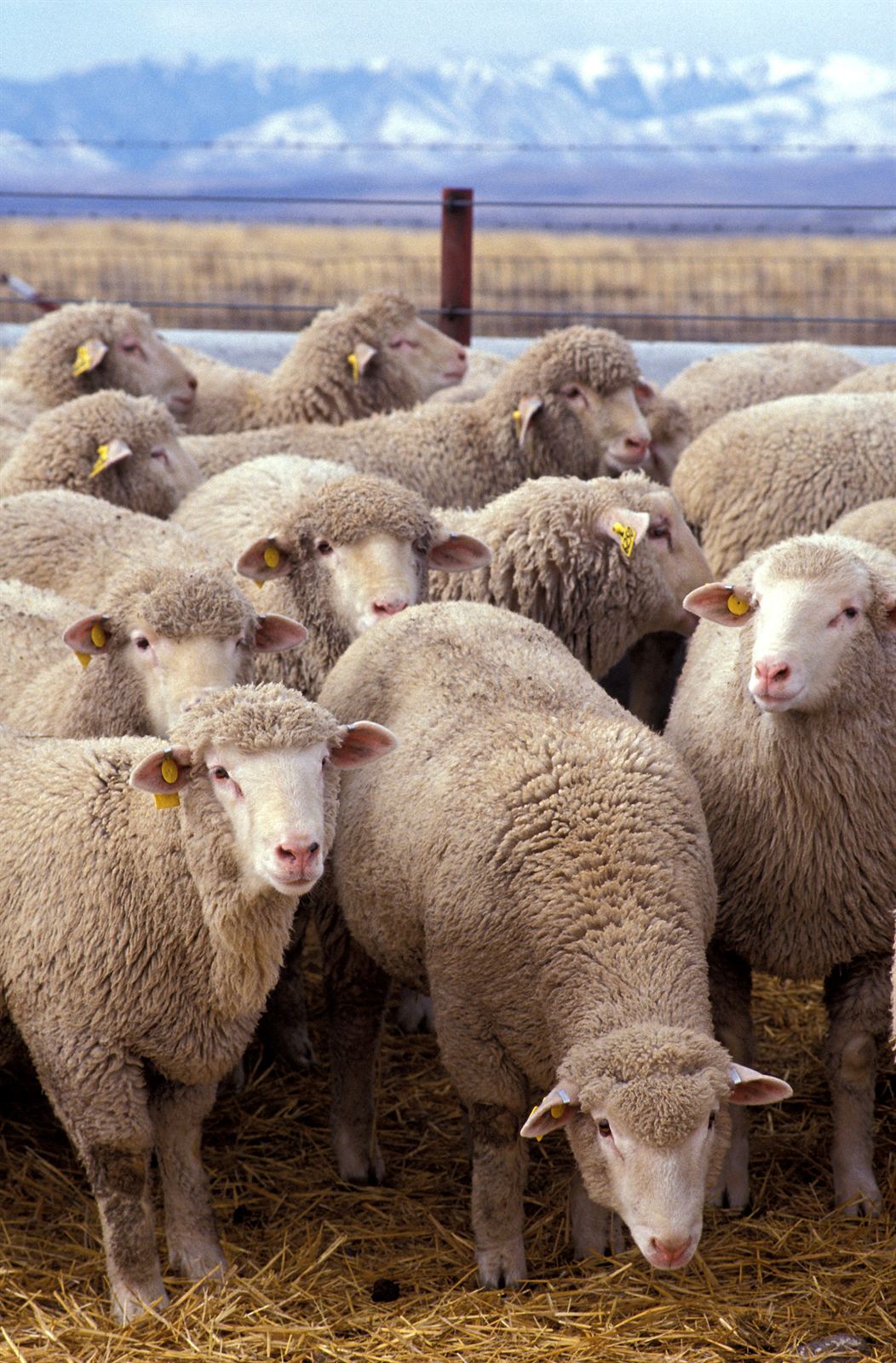
Terminology
- Greasy wool: shorn fleece before scouring
- Merino: fine-wool breed, fiber 12 to 24 µm
- Carpet wool: coarse wool, 35 to 45 µm
- Superwash: treatment that prevents felting, introduced in the early 1970s
- Keratin: the protein of the fiber
History and demand
First uses in construction
- Recycled wool insulation used in the walls of a UK net-zero carbon restaurant opened December 2021
Sourcing
- About 1.98 million tonnes of greasy wool produced worldwide in 2024; China, Australia, and New Zealand are the largest producers
- 2024-25 Australian season: 1,419,576 bales sold at auction for A$1.94 billion
Composition and production
Raw materials
- Keratin protein with about 2 to 3 percent lipids
Manufacturing process
- Shearing, scouring, and carbonizing to remove vegetable matter, then carding, spinning, and weaving or felting
Product forms
- Yarn for carpet and woven fabric, felt, and insulation batts
Grades and types
| Grade | Fiber diameter |
|---|---|
| Superfine Merino | 15.6 to 18.5 µm |
| Fine Merino | 18.6 to 20 µm |
| Medium Merino | 20.1 to 23 µm |
| Strong Merino | above 23 µm |
| Fine crossbred | 27 to 31 µm |
| Carpet wool | 35 to 45 µm |
Properties
Physical
- Fiber diameter: Merino 12 to 24 µm; fibers at or above 30 to 32 µm cause mechanical itching
- Fiber length: Merino 90 to 115 mm (3.5 to 4.5 in.)
Thermal and moisture
- Water absorption: absorbs almost one-third of its weight in water
- Wet strength: wet wool is weaker than dry wool
Fire behavior
- Limiting oxygen index: 25 to 26 percent, versus 18 percent for cotton and 20 to 21 percent for polyester
- Ignites at a higher temperature than cotton and some synthetics
Uses in buildings
Building elements
- Carpet Tile: wool carpet face yarn
- Wall and Roof Insulation: recycled wool insulation
Pros and cons
Pros
- Renewable and biodegradable
- Higher LOI than cotton and polyester
- Insulates and holds air in the pile
Cons
- Weaker when wet and prone to mold and mildew if left wet
- Costs more than nylon
- Coarse fibers can irritate skin
Sustainability
Recycled content and end of life
- Recycled wool is reused in insulation; wool acts as a slow-release nitrogen source when used as fertilizer
Health
- Raw wool historically carried anthrax spores (woolsorters' disease)
- Wool is not identified as a skin allergen; coarse fibers cause mechanical irritation
Manufacturing and cost
Main manufacturers and suppliers
Trade association: Woolmark.
Sources
- Wikipedia: Wool, https://en.wikipedia.org/wiki/Wool
- Fibre2Fashion: Flame resistance of wool (CSIRO), https://www.fibre2fashion.com/industry-article/3034/flame-resistance-of-wool
- Wikimedia Commons: Flock of sheep.jpg, photo by Keith Weller (Public domain), https://commons.wikimedia.org/wiki/File:Flock_of_sheep.jpg