Carbon Fiber
Summary
Cols
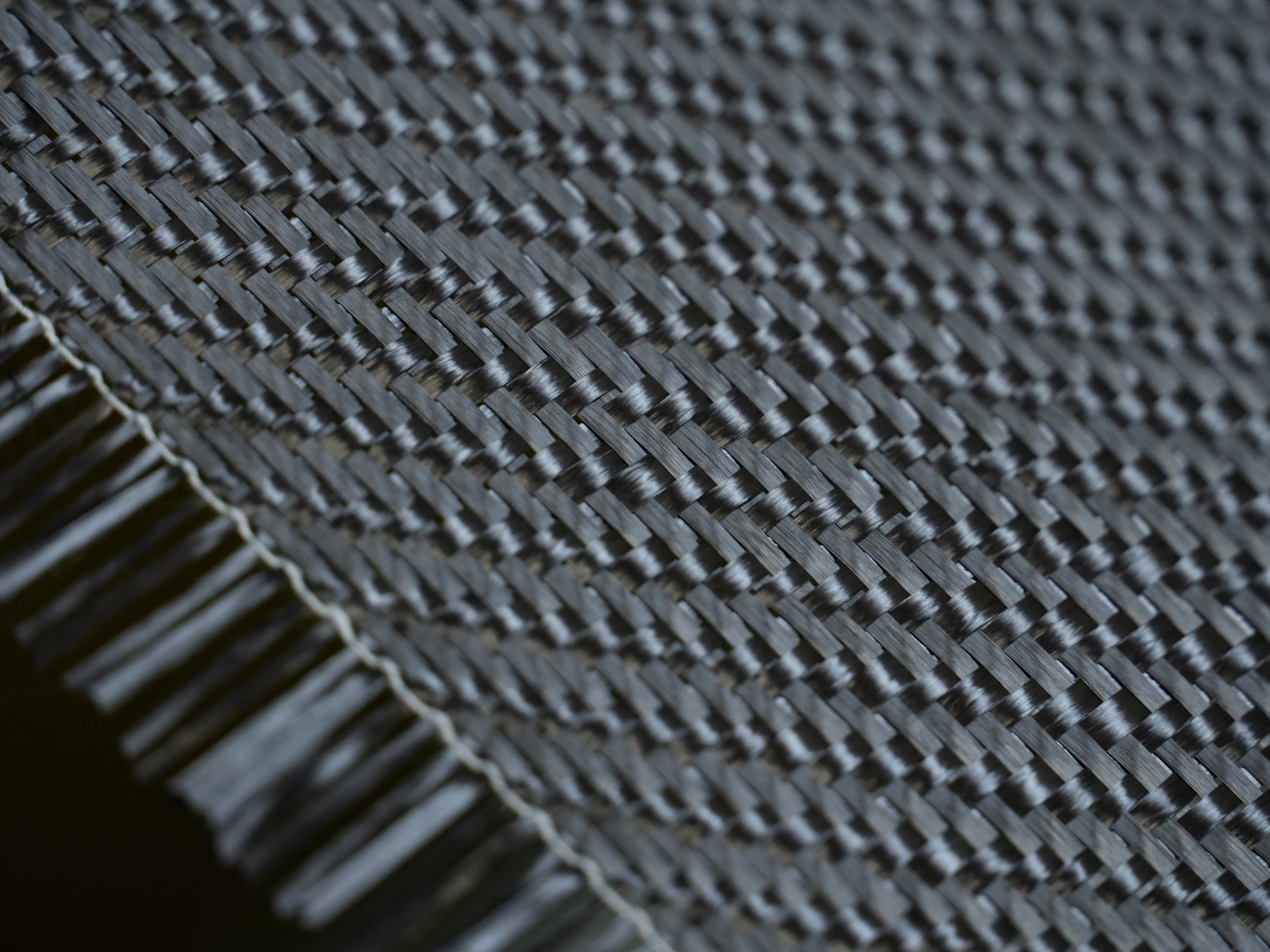
Terminology
- CFRP: carbon fiber reinforced polymer
- Tow: bundle of thousands of filaments; sized with a coating such as PEO or PVA
- PAN-based: fiber from polyacrylonitrile precursor; high tensile strength
- Pitch-based: fiber from petroleum pitch; high modulus and thermal conductivity
History and demand
Invention
- 1860: Joseph Swan made carbon fibers for light bulbs; 1879 to 1880 Edison and Lewis Latimer developed carbon filaments
- 1958: Roger Bacon's rayon-based fibers at Union Carbide, about 20 percent carbon
- Early 1960s: Akio Shindo's PAN process gave about 55 percent carbon; 1963 high-strength process at the Royal Aircraft Establishment
- 1970s: Japanese firms led PAN-based production; Toray T400 about 4,000 MPa
Sourcing
- China held 171,080 tonnes, 52.5 percent, of about 326,080 tonnes of global operating capacity in 2025, the first time above half (ATA report)
- Toray reported about 64,000 tonnes of capacity in March 2024, over 20 percent of installed capacity (market research)
Composition and production
Raw materials
- PAN, rayon, or petroleum pitch precursors; PAN is the main route
- Matrix is typically epoxy in construction products
Manufacturing process
- Polymerize acrylonitrile and spin into filament yarn
- Stabilize in air at about 570°F (300°C); fibers shrink
- Carbonize in inert gas at about 3,600°F (2,000°C) to 93 to 95 percent carbon
- Graphitizing at 2,500 to 3,000°C raises modulus
Product forms
- Tows, woven fabrics, unidirectional sheets, and cured laminates (plates, rods)
Properties
Physical
- Density (Toray T700S fiber): 1.80 g/cm³ (about 112 lb/ft³)
Mechanical
- Tensile strength (T700S fiber): 4,900 MPa (about 711 ksi)
- Tensile modulus (T700S fiber): 230 GPa (about 33,400 ksi)
- Composite (T700S, 60 percent fiber volume, epoxy cured at 130°C): 2,860 MPa (about 415 ksi) tensile strength, 134 GPa (about 19,400 ksi) modulus
Thermal and moisture
- Low thermal expansion and high temperature tolerance as a fiber; the matrix limits composite service temperature
Durability
- Chemical resistance
Standards
Design guides
- ACI 440.2R-17: design and construction of externally bonded FRP systems for strengthening concrete structures; additional tensile reinforcement only, not for resisting compression
Uses in buildings
Building elements
- Cast-in-Place Concrete Beams and Columns, Cast-in-Place Concrete Walls: externally bonded strengthening of members
- Concrete Strengthening: wraps, plates, and near-surface-mounted rods
Pros and cons
Pros
- High strength-to-weight ratio and stiffness
- Low thermal expansion; chemical resistance
Cons
- Cost about 10 to 12 times steel in automotive use (down from about 35 times in the early 2000s)
- Galvanic corrosion with metals unless sealed or isolated
- Strengthening systems are tension-only
Design considerations
Compatibility
- Carbon composites cause galvanic corrosion in contact with metals such as aluminum; isolate with sealant
Manufacturing and cost
Main manufacturers and suppliers
Trade association: American Composites Manufacturers Association.
Sources
- Wikipedia: Carbon fibers, https://en.wikipedia.org/wiki/Carbon_fibers
- Toray Composite Materials America: T700S data sheet, https://www.toraycma.com/wp-content/uploads/T700S-Data-Sheet-4.22.2025.pdf
- ACI: ACI 440.2R-17 preview, https://www.concrete.org/Portals/0/Files/PDF/Previews/440.2R-17_preview.pdf
- Wikimedia Commons: Woven carbon fiber fabric.jpg, photo by Acheolg (CC BY-SA 4.0), https://commons.wikimedia.org/wiki/File:Woven_carbon_fiber_fabric.jpg
- CompositesWorld: ATA 2025 global carbon fiber composites market report, https://www.compositesworld.com/news/ata-2025-global-carbon-fiber-composites-market-report-documents-record-demand
- CompositesWorld: an outlook on China's carbon fiber market, https://compositesworld.com/articles/an-outlook-on-chinas-carbon-fiber-market